
College Costs Too Much to Skip This
FAFSA connects you to grants, state aid, and campus support.

What is the fafsa?
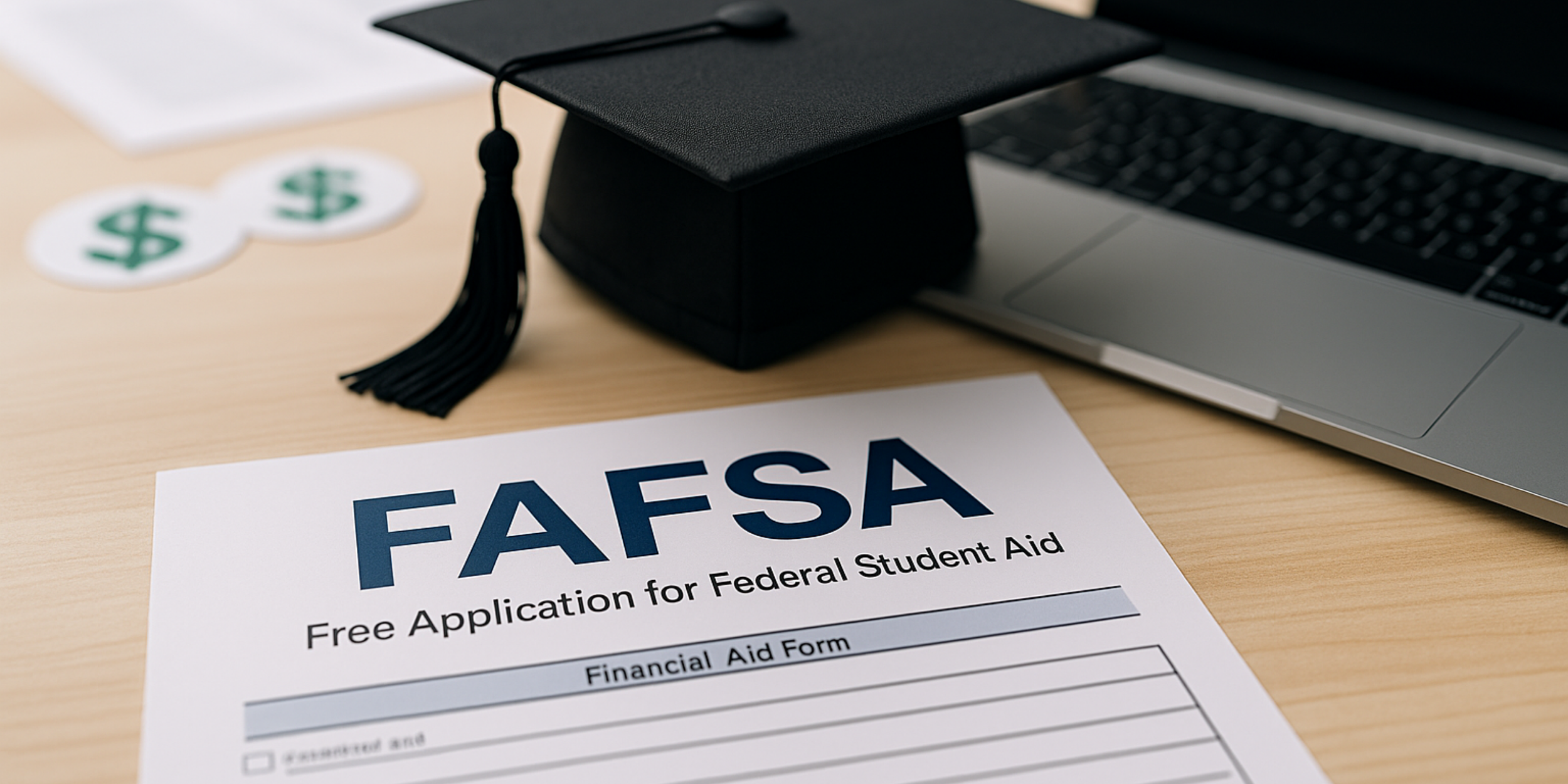
The FAFSA is a free form that helps you get money to pay for college.
Colleges use it to figure out if you qualify for:
Grants (free money)
Work-study jobs
Low-interest student loans
If you're planning to go to college, this form is the first step to getting help with the cost.

Who Fills Out the FAFSA?
A student can legally log in and fill out the FAFSA independently—the software is designed to make the basic data entry look simple. But "simple" data entry is exactly how major financial mistakes happen.
If you are under 24 and unmarried, the federal government requires your parents' exact tax and income profiles to calculate your aid. The student can type the numbers in, but both the student and the parent must log in separately to sign the form using their own unique FSA IDs.
This is the exact moment where middle-class families get trapped. Connecting your IRS tax data to the portal is mandatory now.
If parents run a small business, file anything other than a standard tax return, or have a split, divorced, or blended family, the system's automated calculations can easily misinterpret household wealth.
Before you link your profiles and permanently lock those numbers in, let's audit your draft together to ensure your assets are completely protected from software glitches.
When To Complete The fafsa
As soon as it opens. Every year.
The FAFSA traditionally opens October 1 for the upcoming school year. However, recent federal overhauls have caused major, unpredictable timeline shifts—including systemic delays that have repeatedly pushed openings into late winter. Because the launch dates change constantly, missing critical first-come, first-served state and university funding windows is a massive risk for families who try to navigate the system alone.
Here’s the general rule:
The earlier you fill it out, the better.
Some schools and states give out aid first-come, first-served — so don’t wait around.
You’ll need to submit a new FAFSA every year you're in college.
First-come, first-served means zero room for processing delays.
A single formatting mismatch on your asset declarations can cause a federal rejection, pushing your application to the back of the institutional line.
Secure your priority aid window with a rapid compliance check.
How To Complete the fafsa
-
Before you can start the FAFSA, you need an FSA ID — it’s your login for the FAFSA site.
You’ll create a username and password
You’ll link it to your email and phone number
Your parent will need their own FSA ID too (if you’re dependent)
Tip: Don’t lose this login — you’ll use it every year.
-
You’ll list the colleges you want your FAFSA sent to (up to 20).
Not sure where you're going yet? No worries — you can add or remove schools later.
Just list any schools you’re seriously considering so they can build your aid offer.
-
The FAFSA will ask for things like:
Your name, address, and Social Security number
Whether student worked or had income
Parent's info (if you’re considered dependent)
Your federal tax information which is pulled directly from the IRS database.
The data transfer happens quickly, but the backend calculation is incredibly rigid.
Once the system pulls your tax transcript, its automated algorithms categorize your assets based purely on a computer program.
If your family has unique financial situations or business investments, an unverified automated pull is exactly how software errors permanently mess up your aid index.
-
When everything’s done, you and your parent (if required) will sign with your FSA IDs and submit it. Once both student and your parent sign this page electronically, IRS data is locked in and sent directly to your college choices.
A single mistake on your asset tracking or household status can freeze your application or completely disqualify you from state grant money.
Before you hit the final submit button, let’s audit your draft together to make sure your family's assets are completely shielded from software glitches.
INVESTMENT: $99 (INCLUDES LIVE SCREEN-SHARE AUDIT)
Want to see what the FAFSA looks like before you fill it out?
You can walk through a demo version of the 2025–26 FAFSA — no login, no stress.
Just click the link below and enter the access code to get started:
🔗Visit the FAFSA Prototype
Access code: prototype2526
This is a great way to see the questions ahead of time so you know exactly what to expect.
FAFSA FAQs
I’m 18 and my parents don’t support me — why do I still need their info on the FAFSA?
We get it, it’s frustrating. But the FAFSA doesn’t go by your personal situation or how much support you actually get. It goes by strict federal rules.
Even if you’re 18 and totally financially independent, the FAFSA still considers you a dependent student unless you meet certain criteria — like being 24 or older, married, a parent, a veteran, or having legal guardianship.
See who qualifies as dependent here.
That means you’ll still need your parent’s info on the FAFSA, even if they:
Don’t support you financially
Don’t live with you
Don’t plan to help with college
The FAFSA is not about whether your parents want to help — it's about how the system calculates eligibility.
Before you contact a college aid office alone, download my free Dependency Override Checklist. It lists the exact third-party verification lines and documentation types that university directors look for during an audit.
What if my parents refuse to complete the FAFSA?
If you're a dependent student and your parents won't provide their information, it limits what federal aid you can get — but it doesn't mean you're completely out of options.
Even if your parents won’t help or support you financially, the FAFSA still considers you dependent unless you meet certain federal criteria. That means you usually need their info to qualify for most federal aid, like Pell Grants or need-based loans.
If you are a parent withholding your data because you are worried about asset exposure, data privacy, or a complicated divorce structure: please look at the math.
By refusing to sign, you aren't saving your assets from a software calculation—you are actively penalizing your student. Without a parent’s input, the form marks them as incomplete, automatically blocks them from all Pell Grants and state aid, and forces them into high-interest Direct Unsubsidized Loans.
You don't have to navigate this blind. Let's look at your tax schedules together to legally shield your wealth without ruining your child's financial future.
What if my parent didn’t file taxes?
If you're a dependent student, you'll need to include your parent’s tax information on the FAFSA even if they didn’t file.
That’s usually only okay if:
They didn’t earn enough to be required to file
They filed for an IRS tax extension
They live outside the U.S. and got an automatic delay
They’re active-duty military with a suspended filing deadline
If none of these exemptions apply, parents cannot simply skip this section. The modern FAFSA software requires mandatory consent to cross-reference records directly with the IRS database. If parents had income above the legal threshold but didn't file a tax return, the system will trigger an immediate mismatch error that freezes your financial aid package completely.
You cannot ignore a non-filer status, but you can navigate it strategically. If your family household has unfiled tax years, runs a cash-based business, or has complex income records, don't let a federal software system flag your data. Let's look at your income lines together on an intake form to map out a safe, compliant workaround before you touch the live portal.
What if I live with someone who isn’t my parent?
You’re not alone. Many students live with someone other than a parent, and your situation matters.
Here’s what the FAFSA looks at:
Legal parents only — that means biological or adoptive parents
A step-parent if they’re currently married to your legal parent
Even if you live with and are supported by someone else — like a grandparent, aunt, cousin, or family friend — the FAFSA still asks for your legal parent’s info unless you qualify as an independent student.
You may be considered independent if:
Your parent is deceased
You’ve been in foster care or a legal guardianship
You’ve been declared homeless or at risk of homelessness
Your parent is incarcerated
You’re unable to contact your parents due to serious circumstances
Trying to explain a messy family situation to a busy financial aid office can feel terrifying. But I've been on the inside of those offices, and I know exactly how to help you handle it.
To take the pressure off, I’ve open-sourced my core compliance tools inside my private Resource Vault. Inside, you’ll unlock the exact checklist showing you what paperwork to gather for complex household situations, along with my Net Price Sandboxes and Course Rigor matrices.
Grab your access below, and let's get your funding secured.
What if my parents aren’t documented?
That’s okay — you can still complete the FAFSA.
The FAFSA doesn’t ask about your parent’s citizenship status, and it won’t affect your ability to apply for aid.
Still unsure about something?
Every family’s financial aid situation has unique wrinkles, and trying to find answers on a generic government FAQ page will only leave you more confused.
If you are still feeling stuck, stressed, or just want absolute certainty before you sign your name, don't leave your funding to chance.
Let's do a quick live double-check together instead. Secure a Pre-Filing FAFSA Audit, and we will look over your actual screens face-to-face to ensure your family's records are completely protected.
SUBMIT WITH TOTAL CERTAINTY
Connecting your taxes to the federal portal is mandatory. If you run a small business, file anything other than a standard tax return, or have a split or blended family, the system's automated calculations can easily miscalculate your household numbers.
Once you hit submit, those numbers are locked into a rigid federal algorithm. A single box filled out incorrectly can accidentally flag your accounts, trigger an administrative audit backlog, or completely disqualify your child from state and university grant funding.
You have done the research. Now protect your wealth. Let an institutional financial aid veteran review your draft fields line-by-line so you can submit your application with total certainty.